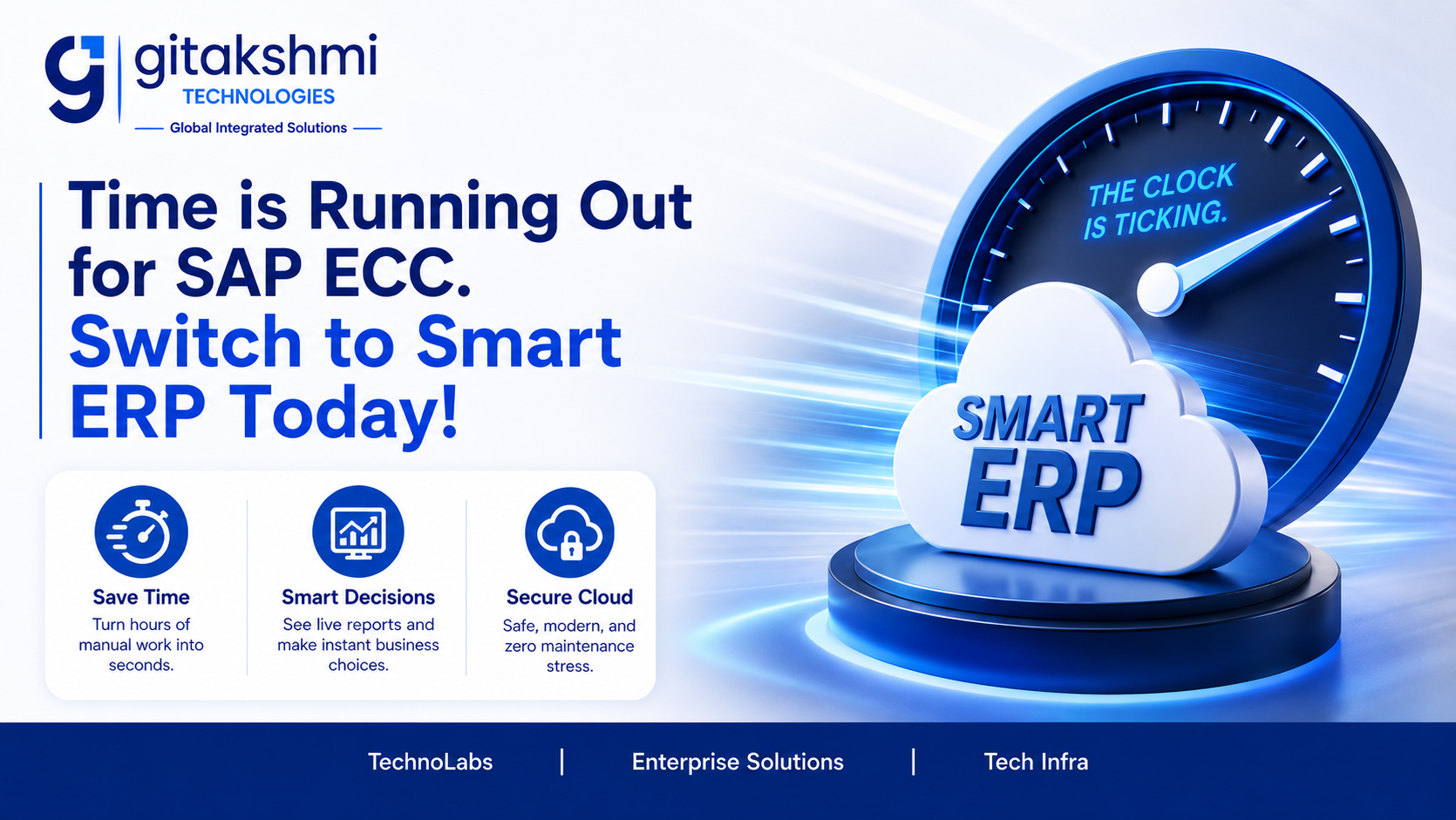
SAP ECC Support Is Nearing Its End: Is Your Business Ready for What’s Next?
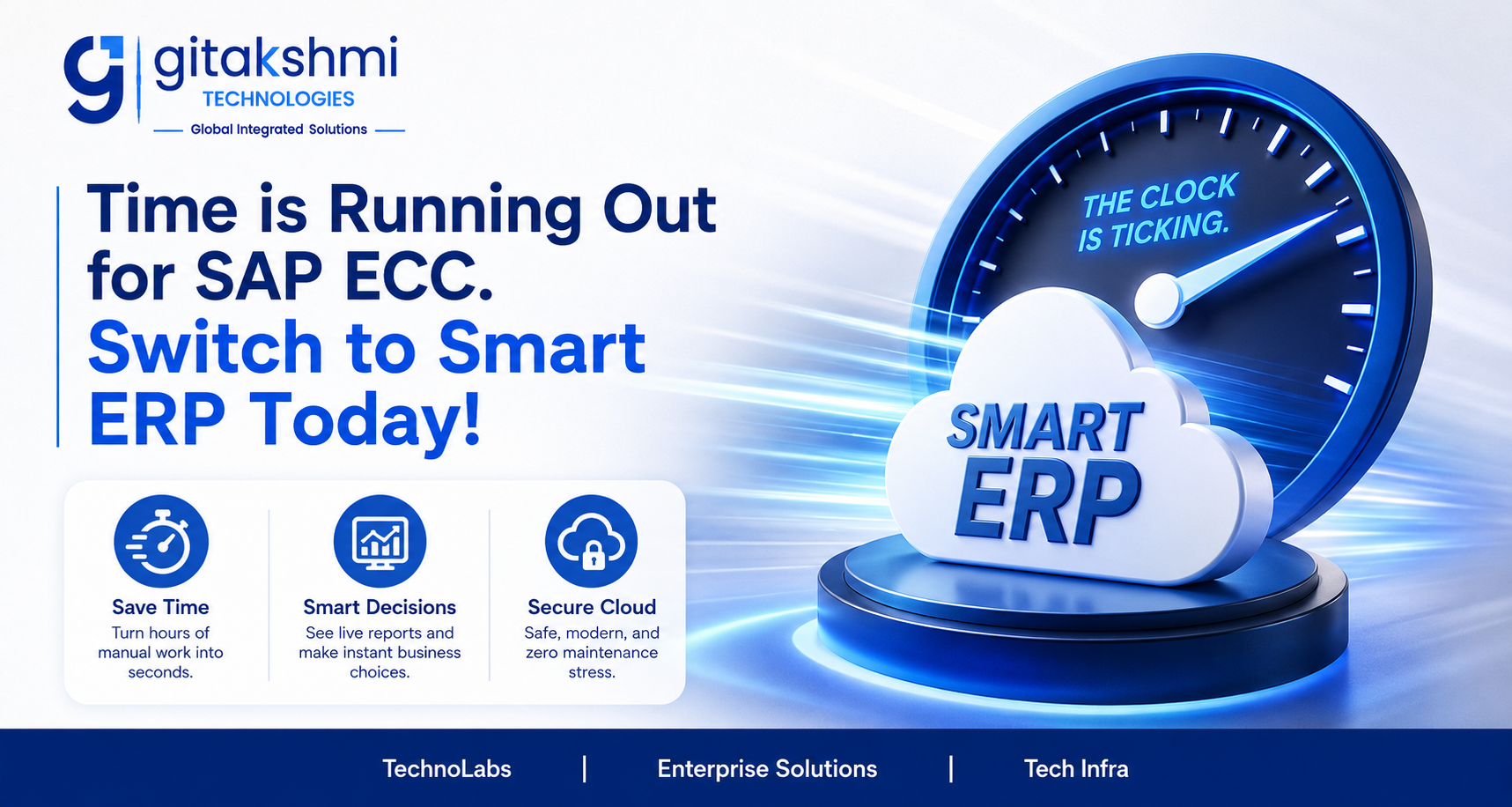
SAP ECC Support Is Nearing Its End: Is Your Business Ready for What’s Next?
As a leading SAP Consulting Company & Service Provider, Gitakshmi Technologies provides end-to-end migration frameworks designed to transition your legacy architecture seamlessly. Whether your objective is upgrading to next-generation intelligent platforms or implementing the higher ending sap services, planning your migration strategy today ensures continuity, security, and long-term scalability
The Strategic Reality: Why You Cannot Afford to Wait
1. The Financial Strain of Extended Support
2. Infrastructure Vulnerabilities and Security Risks
3. Innovation Stagnation and Technical Debt
System Comparison: SAP ECC vs. Intelligent ERP Architecture
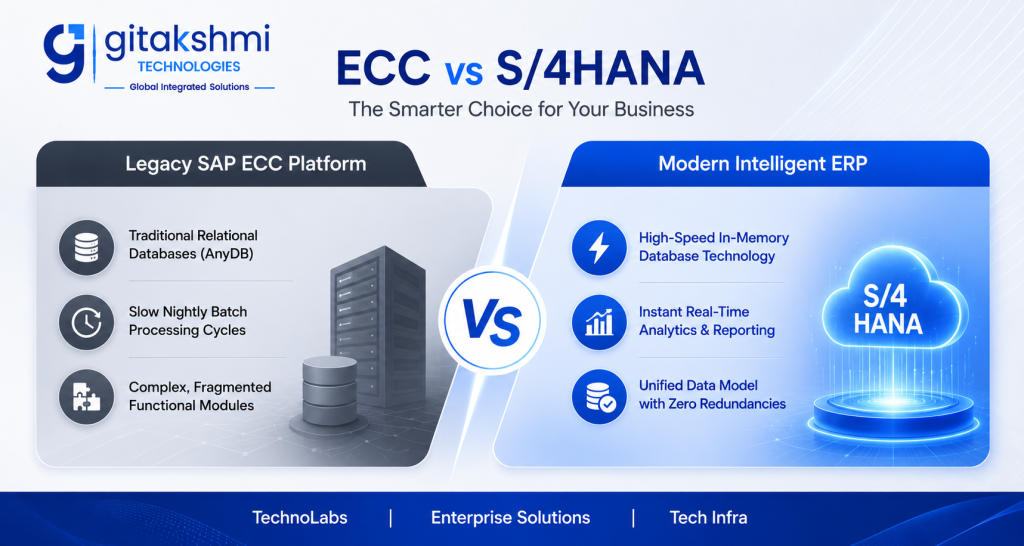
| Architectural Dimension | Legacy SAP ECC Platforms | Modern Intelligent ERP Platforms |
|---|---|---|
| Database Architecture | Third-party relational databases (AnyDB); relies on heavy data indexing and data duplication. | In-memory database technology; processes data natively in RAM for instant access. |
| Architectural Dimension | Legacy SAP ECC Platforms | Modern Intelligent ERP Platforms |
|---|---|---|
| Database Architecture | Third-party relational databases (AnyDB); relies on heavy data indexing and data duplication. | In-memory database technology; processes data natively in RAM for instant access. |
| Data Processing Model | Traditional batch processing; reporting requires overnight reconciliation cycles. | Real-time transaction processing and analytics execution on a single data layer. |
| User Experience (UX) | Traditional SAP GUI; functional but complex, requiring specialized user training. | Responsive, role-based user interfaces accessible across mobile and desktop environments. |
| Functional Core | Segregated modules (MM, FI, SD) requiring complex, custom reconciliation steps. | Unified data model with simplified tables, eliminating data redundancies. |
The Tangible Business Benefits of ERP Modernization
Real-Time Financial Visibility and Group Controlling
Streamlined Supply Chain and Intelligent Procurement
Process Automation and Operational Efficiency
Formulating Your Migration Strategy: The Three Proven Routes
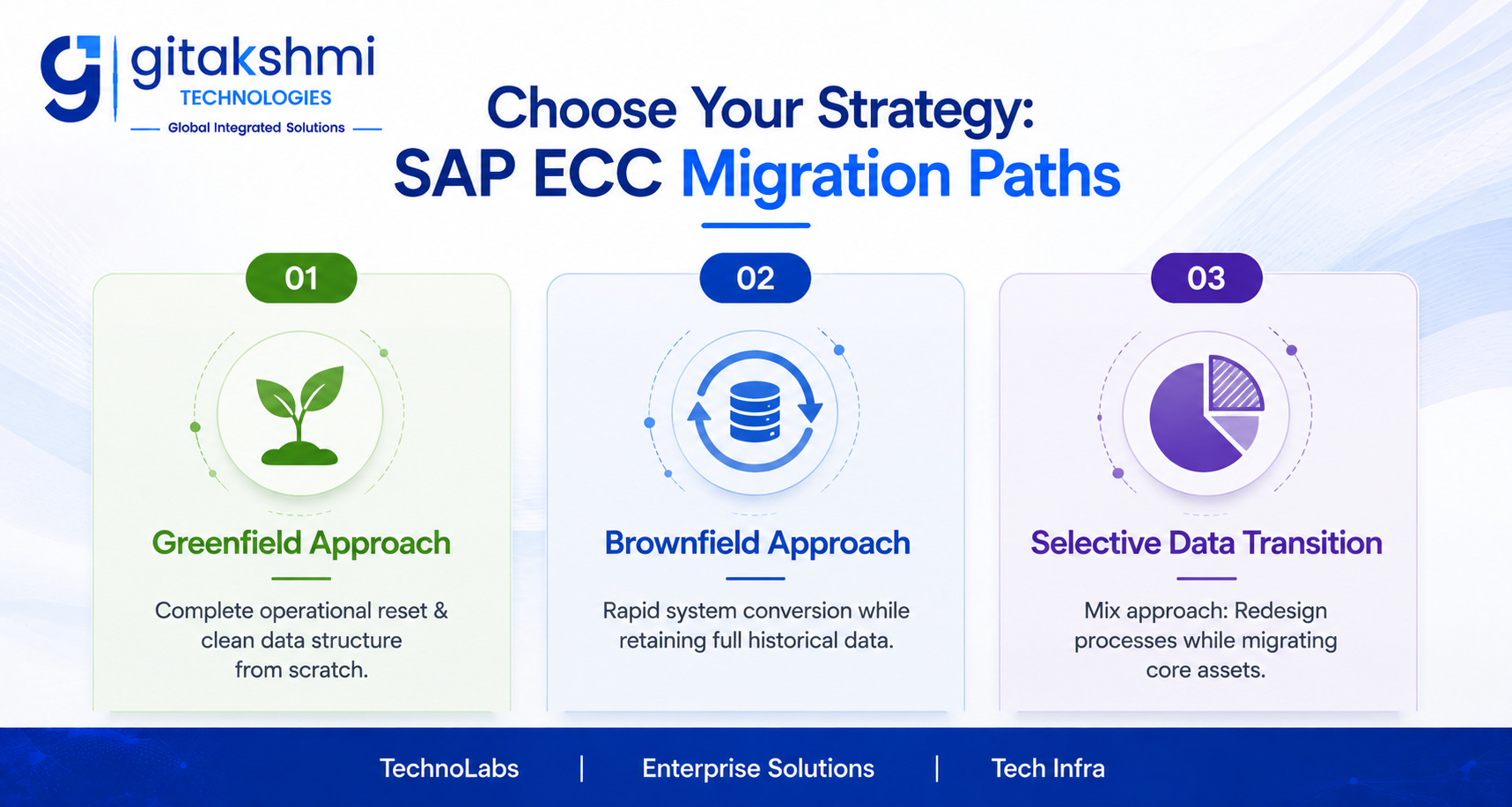
1. The Greenfield Approach (New Implementation)
The Greenfield strategy involves re-engineering your entire ERP ecosystem from scratch. This approach is ideal for businesses looking to eliminate heavy legacy customizations, discard obsolete data, and adopt standard best practices from the ground up.
- Advantage: Complete operational reset, clean data structure, and maximum alignment with standard product capabilities.
- Consideration: Requires comprehensive change management and longer initial deployment timelines.
2. The Brownfield Approach (System Conversion)
- The Brownfield strategy focuses on migrating your existing SAP ECC database and business configurations directly to the new platform while preserving historical data and custom developments.
- Advantage: Shorter implementation timelines, minimal disruption to existing business processes, and retention of historical tracking.
- Consideration: Carries over existing legacy technical inefficiencies and custom code complexities if not meticulously optimized.
3. The Selective Data Transition (Hybrid Strategy)
The Hybrid path allows organizations to pick and choose elements from both strategies. You can design new, optimized business processes (Greenfield) while selectively migrating specific, high-value historical datasets or custom modules (Brownfield).
- Advantage: High flexibility, allowing businesses to optimize complex global supply chains or financial structures without losing crucial operational history.
- Consideration: Requires advanced architectural consulting to execute data extraction and mapping properly.
Step-by-Step Implementation Framework
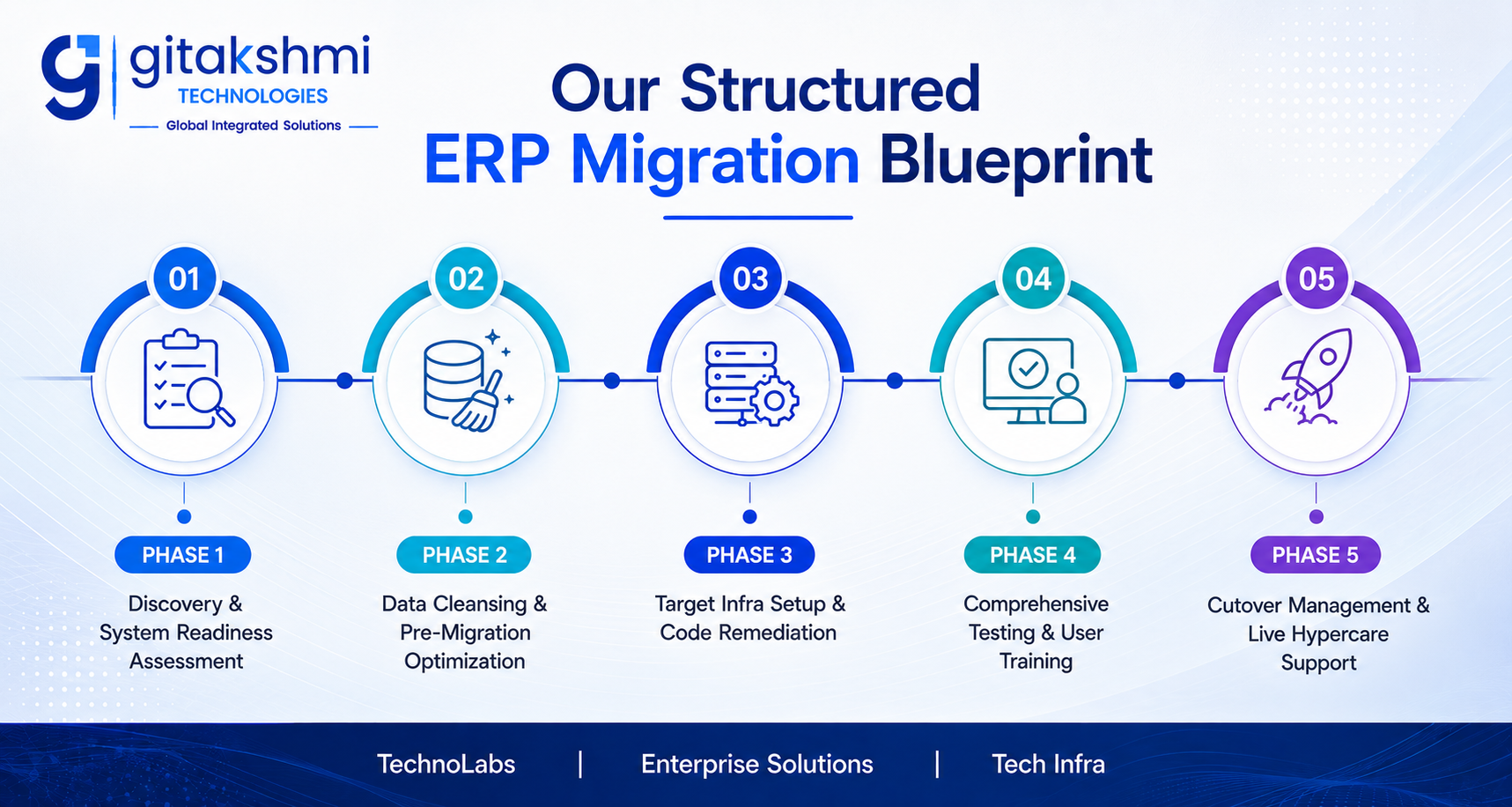
1.Discovery and Readiness Assessment:
2.Data Cleansing and Pre-Migration Optimization:
3.System Transformation and Code Remediation:
4.Testing, Validation, and User Training:
5.Cutover Management and Hypercare Support:
Partnering with Gitakshmi Technologies: Your Migration and ERP Experts
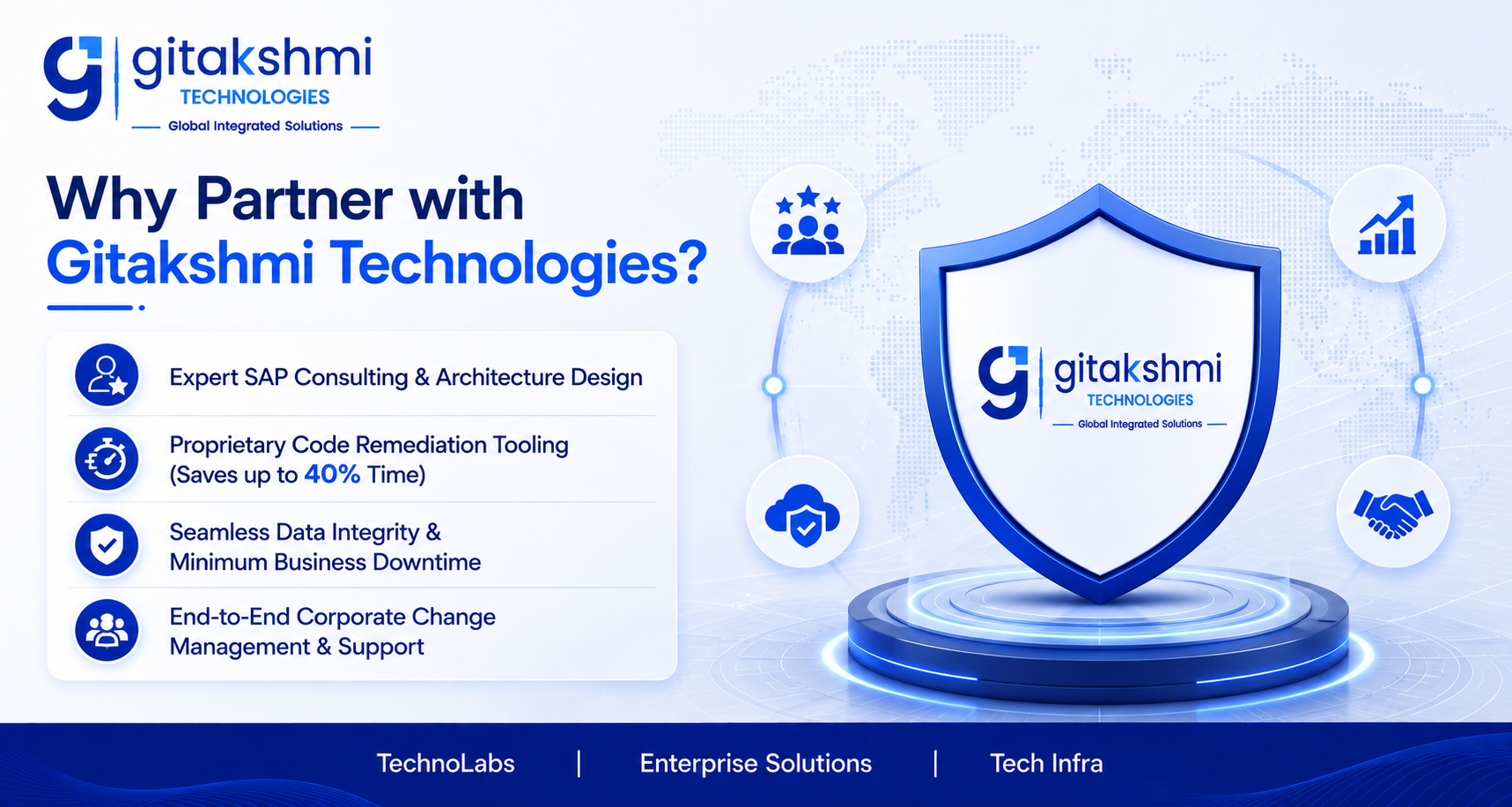
Why Leading Enterprises Choose Gitakshmi Technologies:
- Comprehensive Domain Expertise: Our consultants bring years of specialized experience across core enterprise functions, including Financial Accounting (FI), Materials Management (MM), Sales and Distribution (SD), and Advanced Production Planning.
- Local Insight with Global Standards: As the premier provider of SAP Consulting in Ahmedabad, we combine localized, hands-on support with global deployment methodologies to deliver reliable, scalable results.
- Proprietary Code Remediation Tooling: We utilize advanced diagnostic scripts to automatically identify, clean, and convert legacy custom code, reducing manual development timelines by up to 40%.
- Focused Change Management: We focus on the human side of technology transformations, providing comprehensive training and documentation to ensure high user adoption rates across your entire organization.
Take Control of Your Digital Transformation
The upcoming conclusion of SAP ECC mainstream support is more than a deadline—it is an excellent opportunity to modernize your operations, eliminate technical debt, and build a highly responsive, data-driven business. Delaying this transition exposes your organization to rising support costs and operational bottlenecks that can slow down your growth.
Partnering with Gitakshmi Technologies ensures your migration is handled with technical precision, minimal downtime, and absolute data integrity. Our teams are ready to help you plan a clear, secure path forward.
Don’t wait for support timelines to run out. Contact our senior enterprise architects today to schedule your comprehensive ERP readiness assessment and position your business for its next phase of scalable growth.